From scientific discovery to industrial precision.
Aikemics packages 13+ years of computational simulations into hybrid physics and AI models that cover every battery manufacturing step from the slurry to the cell. Gigafactories and labs use them to decide faster, on infrastructure they control.

Battery manufacturing is still trial-and-error.
A new recipe takes months of physical experimentation to qualify on the line. A new format or line transfer can take years. Material losses during ramp-up run up to 30%. At steady state, a 30–40 GWh plant can lose around 150 M€ a year to scrap. Qualifying a new chemistry can take a decade.
The alternative is predictive engineering. We model the process with mechanistic physics. Where the simulation is too slow for production decisions, AI surrogates take over.
Built for industrial-grade performance and everyday usability.
Five design decisions we made early and held since. They are what let a hybrid model run on a production line.
High fidelity
Physics-driven accuracy across scales. Validated against 2100+ manufacturing scenarios.
Trustable
Every prediction ships with provenance: the model that produced it, its audit trail, its uncertainty band. The platform is built on 185+ peer-reviewed publications.
Real-time
Insights when decisions happen. Surrogate ML models run in milliseconds on the line. Heavy physics jobs run in the background on HPC or cloud.
Flexible
Chemistries (NMC, LFP, Si-anodes, sodium-ion, solid-state), formats (cylindrical, pouch, prismatic) and pilot designs all run on one stack.
User-friendly
Clean UX with actionable guidance. Validated playbooks surface in the tools engineers use all day. No PhD in electrochemistry or material processing required.
Fewer reworks. Faster time-to-production.
One stack, three audiences. The platform fits a process engineer tuning a slot-die head as cleanly as a materials scientist screening binders or a lab lead versioning experiments.
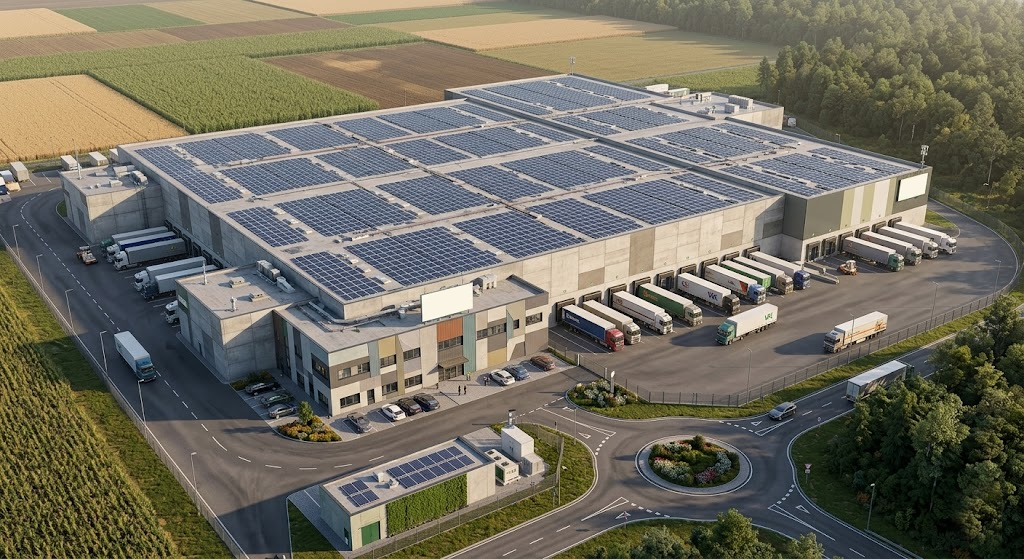
Battery manufacturers & gigafactories
- Calibrate process windows to improve reproducibility
- Shorten ramp-up experimentation by up to 10× before serial production
- Recover ~30 M€/year for every percentage point of scrap avoided
- Scale recipes across lines, formats and chemistries
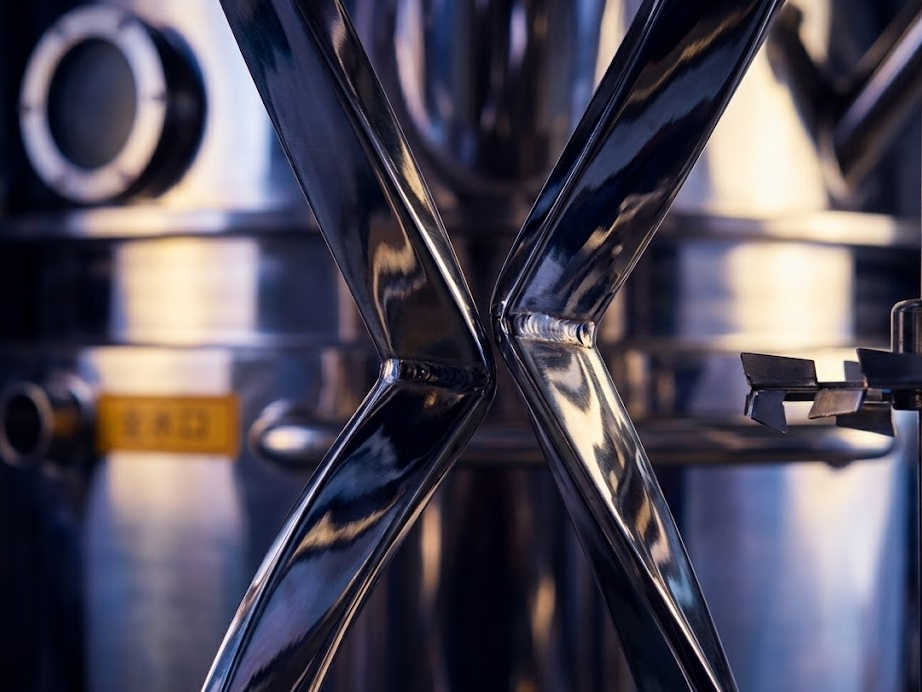
Equipment & materials suppliers
- Co-optimize equipment settings and material specs
- Provide model-informed application notes to customers
- De-risk new formulations and process ranges before customer trials

RTOs & advanced labs
- Unify experimental and simulation workflows in one versioned environment
- Move from one-off studies to repeatable, sharable, replayable models
- Train teams on predictive engineering at scale
Thirteen years of physics.
One deployable platform.
Aikemics is the spinout of Prof. Alejandro A. Franco's research group at LRCS (Laboratoire de Réactivité et Chimie des Solides, CNRS UMR 7314) at Université de Picardie Jules Verne. Prof. Franco's group is one of the world's most-cited research groups in computational modeling and AI. Every module in the platform traces back to peer-reviewed models that were validated and stress-tested before they ever touched a customer line. The platform is the bridge from scientific discovery to the industrial precision a production line demands. An exclusive licensing agreement with CNRS/LRCS is in final negotiation.
Bring us a scoped battery-manufacturing problem.
We come back within a week with a feasibility note, a proposed model and a path to first deployment.